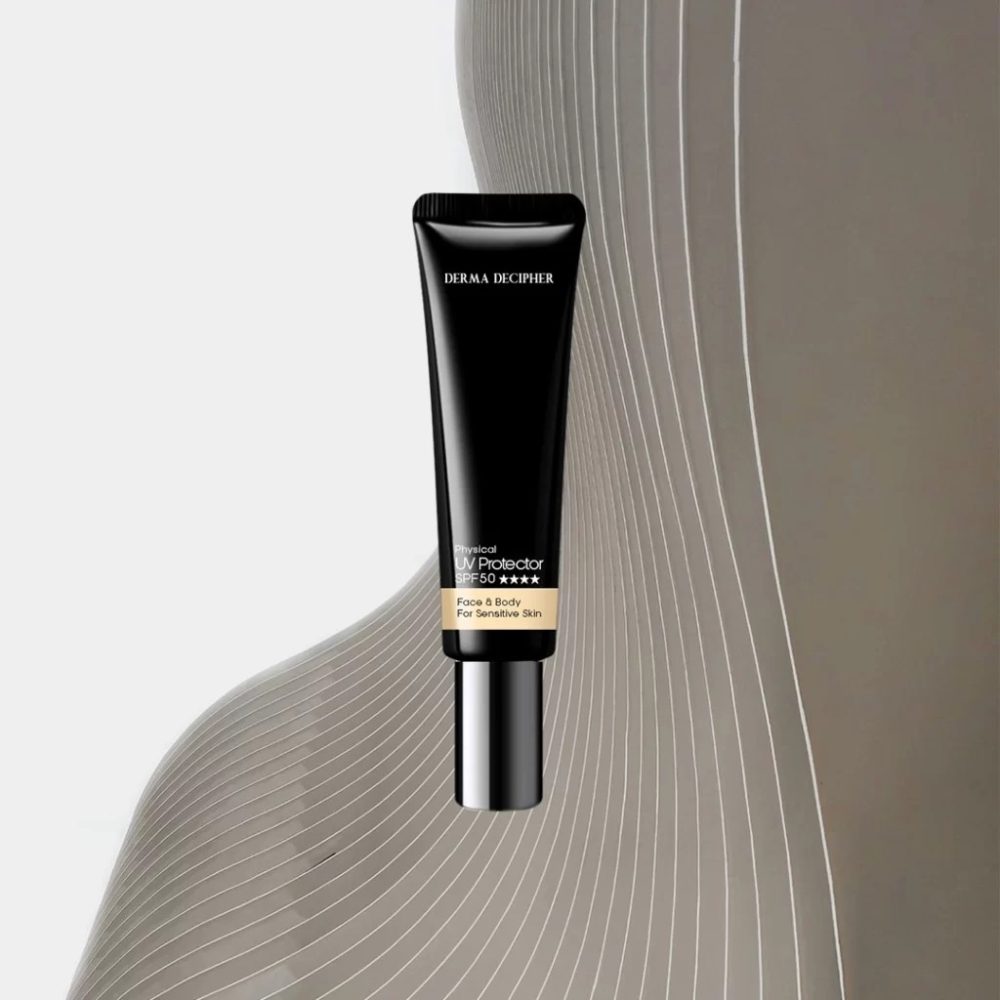
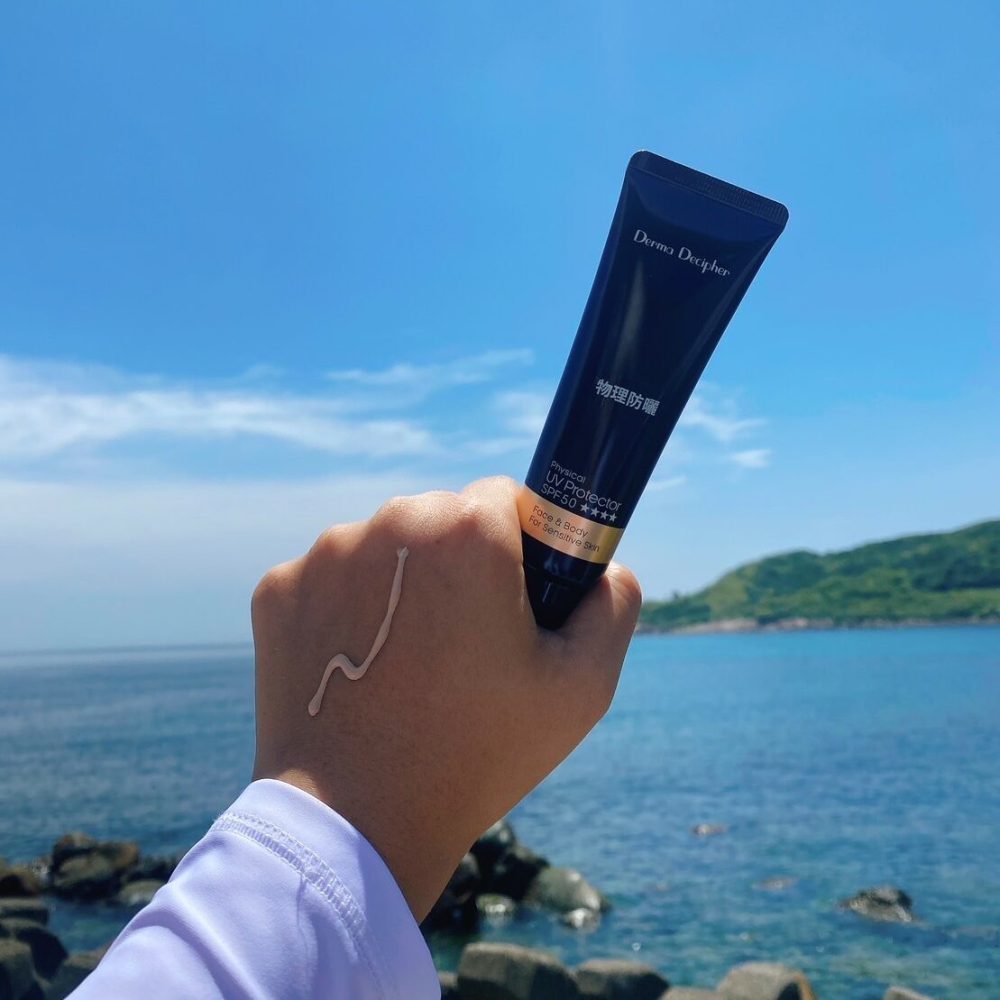
Understanding Sunscreens: Physical vs. Chemical Posted on February 14, 2025 by DERMA DECIPHER Ever heard of physical sunscreen?What’s the difference between physical and regular types?Let’s break it down together! Sunscreens are categorized as physical or chemical based on how they work:Physical sunscreens reflect or scatter UV rays,acting like a jacket that shields your skin from sun exposure.Common ingredients include titanium dioxide and zinc oxide.However, just containing those ingredients doesn’t automatically make a sunscreen physical.To be truly physical, the only UV filters used must be titanium dioxide and/or zinc oxide.For example, DERMA DECIPHER’sPhysical UV Protector contains only titanium dioxide, making it a 100% physical sunscreen.Chemical sunscreens absorb and convert UV rays into heat to neutralize their effect.Common chemical ingredients includeMany commercial sunscreens combine both physical and chemical filters,so they cannot be labeled as purely physical sunscreens. So which is better?There’s no right or wrong—just what works for you!Physical sunscreens are generally safer and more stable,making them a great choice for sensitive skin.But they tend to have larger particles, which can feel heavier.Chemical sunscreens tend to feel lighter and more comfortable,but their small molecules may irritate delicate skin.Those with sensitive skin should always check for trigger ingredients. DERMA DECIPHER Physical UV Protector SPF50★★★★After years of research and testing,we developed a physical sunscreen that feels light, non-sticky, and breathable.Its foundation-like texture doubles as sun protection and base makeup.SPF50★★★★ full-spectrum protection effectively defendsagainst tanning, redness, and aging.A breakthrough formula that’s safe for sensitive skin! Ever heard of physical sunscreen?What’s the difference between physical and regular types?Let’s break it down together! Sunscreens are categorized as physical or chemical based on how they work:Physical sunscreens reflect or scatter UV rays,acting like a jacket that shields your skin from sun exposure.Common ingredients include titanium dioxide and zinc oxide.However, just containing those ingredients doesn’t automatically make a sunscreen physical.To be truly physical, the only UV filters used must be titanium dioxide and/or zinc oxide.For example, DERMA DECIPHER’sPhysical UV Protector contains only titanium dioxide, making it a 100% physical sunscreen.Chemical sunscreens absorb and convert UV rays into heat to neutralize their effect.Common chemical ingredients includeMany commercial sunscreens combine both physical and chemical filters,so they cannot be labeled as purely physical sunscreens. So which is better?There’s no right or wrong—just what works for you!Physical sunscreens are generally safer and more stable,making them a great choice for sensitive skin.But they tend to have larger particles, which can feel heavier.Chemical sunscreens tend to feel lighter and more comfortable,but their small molecules may irritate delicate skin.Those with sensitive skin should always check for trigger ingredients. DERMA DECIPHER Physical UV Protector SPF50★★★★After years of research and testing,we developed a physical sunscreen that feels light, non-sticky, and breathable.Its foundation-like texture doubles as sun protection and base makeup.SPF50★★★★ full-spectrum protection effectively defendsagainst tanning, redness, and aging.A breakthrough formula that’s safe for sensitive skin!